
Tom Ward, Bill Stirling, Dave Danforth, Karinjo Devore (in memoriam)
Four individuals who have made indelible contributions to the Aspen community have been selected by the Aspen Hall of Fame Board of Directors for induction into the 2027 Aspen Hall of Fame. They will be formally inducted at the annual Aspen Hall of Fame Banquet at the Hotel Jerome on April 2, 2027. The banquet features dinner and wine and an awards ceremony highlighted by video profiles of each inductee. This is the 40th year of Aspen Hall of Fame recognition of exemplary community members.
“We received a record number of nominations from the community this year, and we are thrilled to honor four individuals whose contributions have left a lasting mark on Aspen,” said Aspen Hall of Fame Co-Presidents Helene Gude and Walker Moriarty. “We think you’ll agree that these are the people who make Aspen special.”

Tom Ward
Tom Ward’s early passion for theatre set and lighting design led him in two directions – local
theatre companies and local art galleries. Arriving in 1971 after a year in Vietnam, he opened the Gargoyle Gallery and picture framing shop, showcasing local artists. Ward volunteered in 1974 with Aspen High School theatre, designing sets and lights. He designed sets for Aspen Community Theatre’s 1978 production of The Music Man, the first of 34 shows he would design for ACT. Organizing a group of dedicated local volunteers, he inspired them to become scenic artists, creating over 170 shows for every theatre company and school in Aspen. After closing the Gargoyle, Ward was Managing Director of the American Theatre Company in Aspen, 1979-83, and then worked part-time as Development Director for ACES (1984–86), and Director of the Aspen Chapel (1984-96), while continuing to design and create theatre sets.
Ward co-founded the Aspen Chapel Gallery, which over 41 years has presented 270 consecutive exhibitions featuring valley artists and high school art students, in partnership with 63 valley nonprofits. Starting in 1996, he divided his time between the theatre and the Gallery. Throughout the years, his nonprofit involvement has included co-founding the Aspen Snowmass Arts Council, which later became the Red Brick Arts Center, and the Wheeler Opera House Task Force that designated the Wheeler and the old City Electrical plant as cultural facilities. He has been involved with Roaring Fork Leadership, The Aspen Chapel, Aspen Stage, and Thunder River Theatre Company. Tom and Donna Ward have a son, Derek, wife Le, and two grandsons, Kai and Asher.
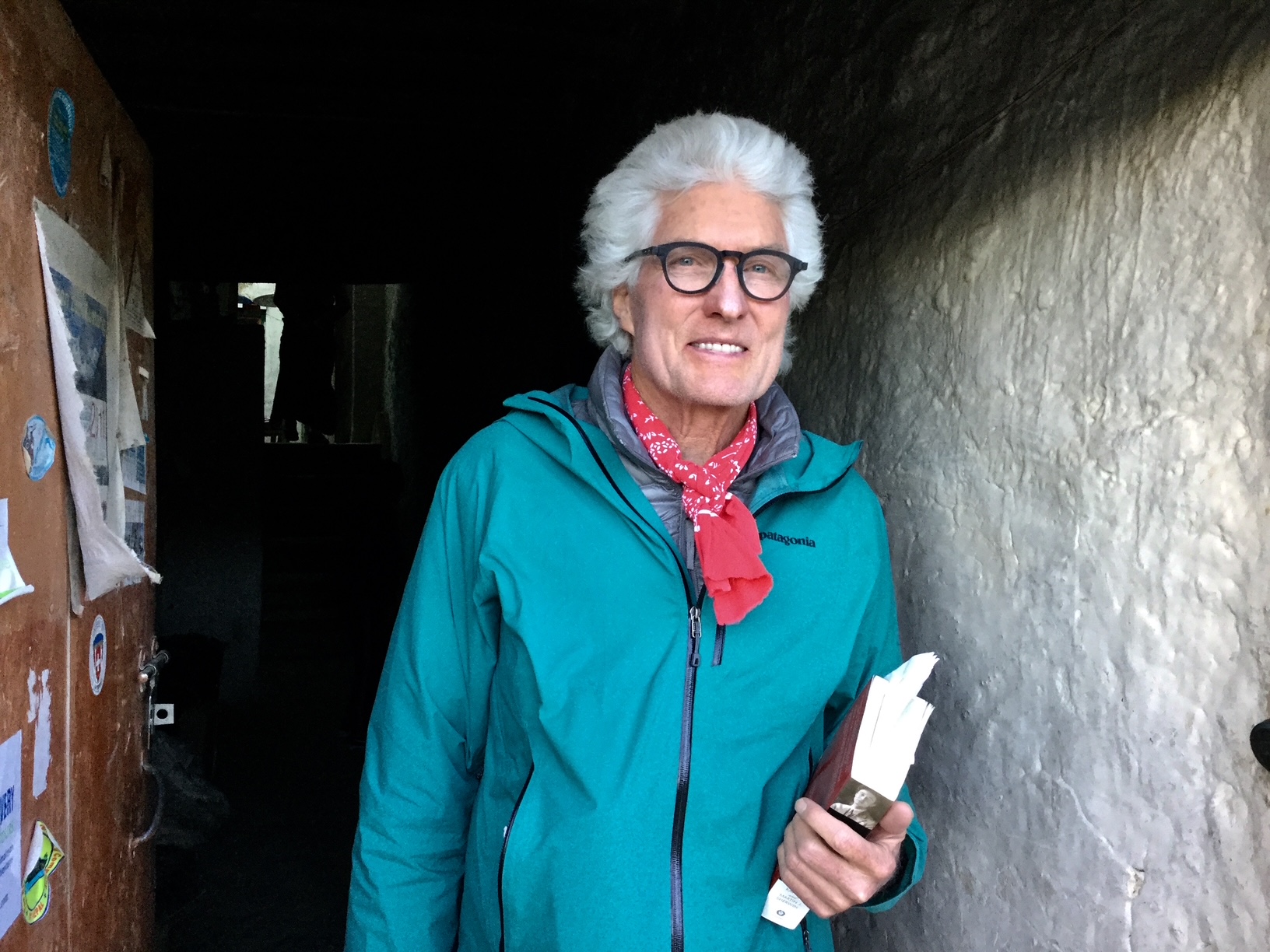
Bill Stirling
Bill Stirling moved to Aspen in 1973, after spending the winter of 1972 in Aspen on a sabbatical from teaching New York City high school dropouts in Harlem for 5 years. He continued bartending over the next several winters and then worked construction in those summers. In 1978, he formed Stirling Homes Inc., a property management and real estate company he ran for the next 35 years. Stirling was a substitute high school teacher and helped form and chair the High School Accountability Committee.
In 1983, Stirling ran for Mayor of Aspen and won. He served a total of four 2-year terms. Those City Councils passed resolutions to join the Pitkin Board of County Commissioners and start the Roaring Fork Transportation Authority. During Stirling’s tenure, City Council also installed the energy-efficient turbine at Reudi Reservoir. Stirling and city colleagues substantially reduced the sizes of both the Little Nell and St. Regis hotel proposals. Stirling also proposed the first Aspen affordable housing tax in 1999, which led to a recall as the tax was quite controversial. Stirling founded the Community Office for Resource Efficiency (CORE) in 1994, after 4 years of monthly meetings to convince the community of the need for an active environmental group. He served for 25+ years as chair and Board member, and is still involved in CORE committees. He also served on the Aspen Center for Environmental Studies (ACES) and Choral Society boards, and has served on numerous community task forces. Stirling is currently a member of the Roaring Fork Transportation Coalition, and hopes the community can identify solutions to untangle the congestion in and out of Aspen morning and evening.

Dave Danforth
If you don’t want it printed, don’t let it happen.” The Aspen Daily News slogan is part of Aspen’s everyday vocabulary, a declaration of journalistic independence memorialized on the entryway wall of Washington, D.C.’s Newseum.
It also captures the spirit of Dave Danforth, who arrived in Aspen in 1975 with a background in college radio and a willingness to ask uncomfortable questions. His early radio career included firings over his news coverage. On July 1, 1978, Danforth, Lee Duncan and Mark W. Shaw launched the Aspen Daily News, inspired by a single-sheet newspaper discovered in Miles City, Montana. Plans took shape around a back table at the Mother Lode, and early issues rolled off a press named Bessie in the basement of Aspen State Teachers College.
Beyond the newsroom, Danforth sang with friends around town and on chairlifts, helped manage a women’s softball team to a pennant, and once debated basketball with Jack Nicholson on a snowy lift ride. A former singing waiter on Cape Cod, he joked with Crystal Palace founder Mead Metcalf that if the newspaper ever fired him, he would audition.
But, as Danforth puts it, “the Daily News kidnapped me.” Its readers—and Aspen—benefited for nearly four decades before he sold the paper in 2017.
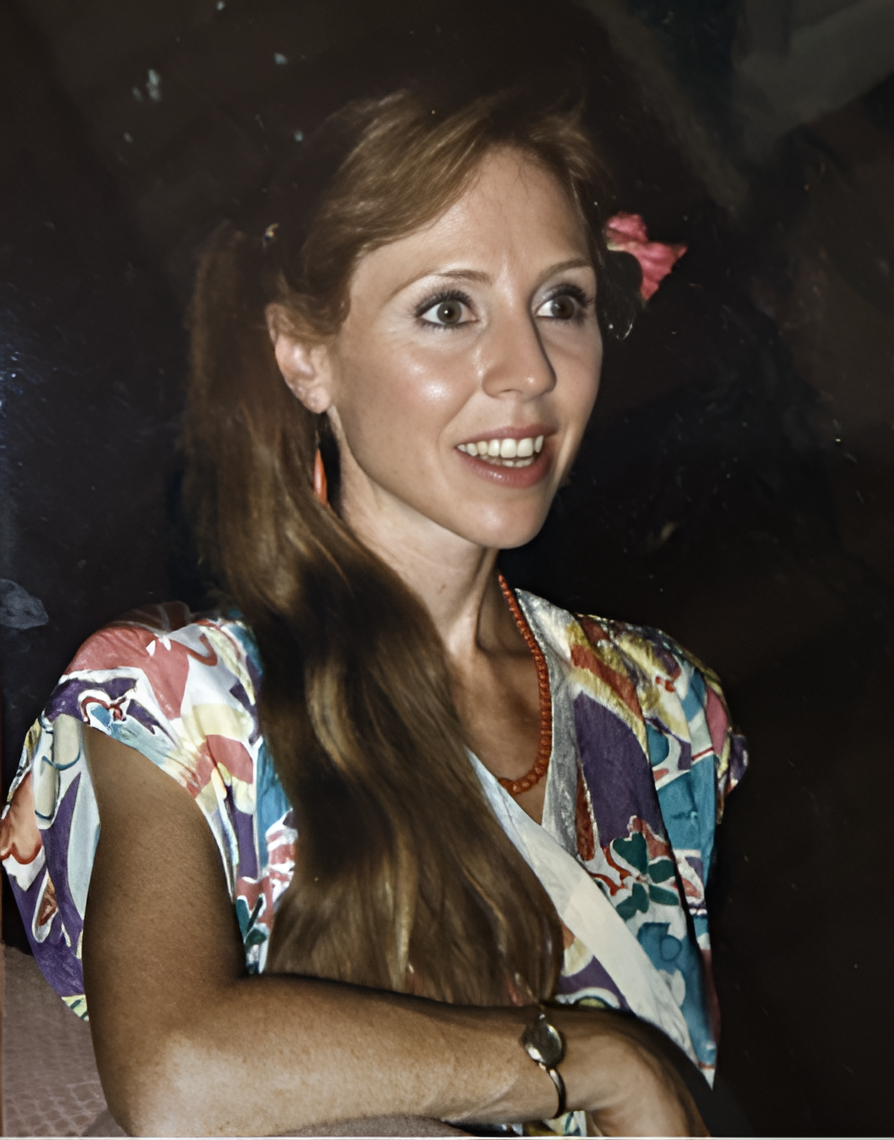
Karinjo Devore
With her passion for the mountains and skiing, her international perspective, and her love for the Aspen area, Karinjo Devore made an indelible impression on our community. Arriving in 1971, she taught Nordic and alpine skiing, worked as a waitress, then attended the University of Colorado and began a career in international development, which took her all over the world. She raised her family in Aspen.
Karinjo was part of the citizens’ group that formed the Aspen Sister Cities Program and served as its long-time chairwoman, connecting Aspen with Davos, Switzerland, and Shimukappu, Japan. She developed early affordable housing for locals and helped launch the Aspen Waldorf School in 1991 to bring holistic education to the Roaring Fork Valley. Karinjo was a founding board member of the Aspen International Mountain Foundation, chartered by the UN to champion sustainable development in mountain communities across the globe and promote regional climate solutions in Western Colorado.
A long-time Aspen Mountain Ambassador, and she routinely earned her 100-day pin until she was 75 years old. Karinjo was a dear friend to many locals, possessed a powerful and creative intellect and an unsurpassed talent for persuasion. Karinjo made good things happen.
A highlight of the induction ceremony and banquet at the Hotel Jerome is the video profile of each inductee that premieres at the event. These life stories are archived on the Aspen Hall of Fame Website at www.aspenhalloffame.org and at the Aspen Historical Society and Pitkin County Library.
About the Aspen Hall of Fame
Since its founding in 1986/87, the Aspen Hall of Fame has honored more than 100 community members for their enduring contributions to Aspen. Its mission is to recognize individuals who embody the spirit of Aspen through excellence and leadership in civic life, culture, sports, and philanthropy, and whose example inspires the next generation to follow in their footsteps. The Aspen Hall of Fame is a nonprofit organization that depends on donations to continue its work. This support keeps the annual banquet affordable for everyone who wishes to attend and funds the production of the documentary videos honoring each inductee. Community sponsors include the Thrift Shop, City of Aspen, Aspen Historical Society, and Aspen Rotary Club.
Invitations to the 2027 Aspen Hall of Fame banquet will be mailed in late February/early March. Community members who would like to receive an invitation can join the mailing list or make a donation at aspenhalloffame.org.